
Student story- Amalie Hegstad Hansen, Aksel Albrektsen Høyer, Johan Salling Danielsen, Frederik Langkilde Kjær, Cecilie Ravn Jensen, Christian Emil Mogensen

Traveling to Narsarsuaq in South Greenland was both a dream come true and an invaluable learning experience for us as a group
Traveling to Narsarsuaq in South Greenland was both a dream come true and an invaluable learning experience for us as a group. Our project focused on arthropods – small creatures like beetles, spiders, and ants that are vital to Arctic ecosystems. Even though they are often overlooked, they play key roles as pollinators, decomposers, and prey for other species.
During our stay, we set up pitfall traps at three different elevations along a mountain slope. This allowed us to study how arthropod diversity and abundance change with altitude – from the warmer, more vegetated lowlands to the colder, harsher environments higher up. Collecting and checking the traps every week was hard work, but it gave us direct insight into how microclimatic differences shape Arctic insect communities.
Being in the field in such a dramatic landscape was inspiring. We worked with simple tools, but the surroundings made every step of the process exciting: walking through flower-rich meadows, crossing rocky terrain, and always having glaciers and mountains in view.
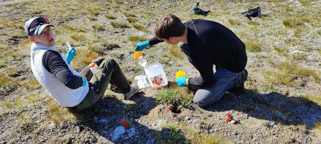
Beyond the scientific side, the trip gave us valuable experience in teamwork and field logistics. We learned how to adapt our methods when conditions changed and how to support each other during long days in challenging terrain. The combination of scientific curiosity, breathtaking nature, and the sense of doing something meaningful made this journey unforgettable.
sense of doing something meaningful made this journey unforgettable.
We returned home with not only samples and data, but also a stronger motivation to continue working with Arctic biodiversity. The experience in Greenland has confirmed our belief that even small organisms can tell big stories about the future of our planet.