
Yellowknife forum highlights need to support Indigenous and minority languages

An international forum held in Yellowknife this week brought together educators, Elders, researchers and community leaders to explore how Indigenous and minority languages can be protected and promoted across northern regions.
Hosted by College Nordique, the event was part of an effort to create a new Thematic Network under the University of the Arctic, an international organization of institutions focused on Northern education and research. Patrick Arsenault, executive director of College Nordique, said the idea has been in development for several years, but planning intensified as the college prepares to submit a proposal for the network by the end of this month.
“When we joined the university of the Arctic, we realized there was no Network dedicated to the Indigenous community and minority languages,” Arsenault said. “This forum helps show that there is both interest and need.” The University of the Arctic is based in Finland and includes members from across the Arctic and beyond. In the Northwest Territories, College Nordique and Dechinta Centre for Research and Learning are both members. Arsenault said Yellowknife was a natural choice to host the forum, citing the territory’s language diversity. The Northwest Territories has 11 official languages, making it unique in Canada.
“That creates a lot of richness, but also challenges,” he said. “It’s an ideal place to talk about Indigenous and minority languages.” Forum participants included educators, scholars and community leaders from across Canada and abroad, including guests from Iceland. Some attended in-person while others joined virtually. “While our experiences are different, there are shared concerns around language loss and the need to protect education and language rights,” Arsenault said.
College Nordique, a Francophone institution, has partnered with Indigenous governments in the past, including offering Tlicho language courses. Arsenault said collaboration allows the strengthening of multiple languages rather than having them compete. He also pointed to funding as a major challenge for language initiatives and called on governments to better recognize and support Indigenous languages in the region. “It’s hard to build sustainable programs when funding is short-term,” Arsenault said.
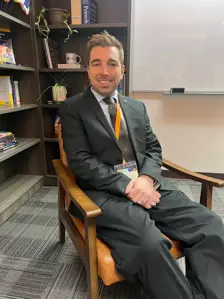
Patrick Arsenault, executive direct of College Nordique, emphasised that funding is a major challenge for language initiatives and called on governments to better recognize and support Indigenous languages in the region.
Photo :Usama Zafar/NNSL
This article was published by Yellowknifer, read the full article here.