Education has always been at the heart of TNHW’s work. In collaboration with partner universities, institutes, and organizations, the network has offered a wide range of learning opportunities — including multidisciplinary summer and winter schools, workshops, and advanced courses for Master’s and PhD students and professionals. These seasonal schools are often held alongside major Arctic conferences, giving students the chance to present their research, build networks, and engage with the broader circumpolar health community.
Since its founding, TNHW and its partners and collaborators from other Arctic networks have delivered over 100 courses, playing a key role in educating professionals from diverse backgrounds in Arctic health and well-being.
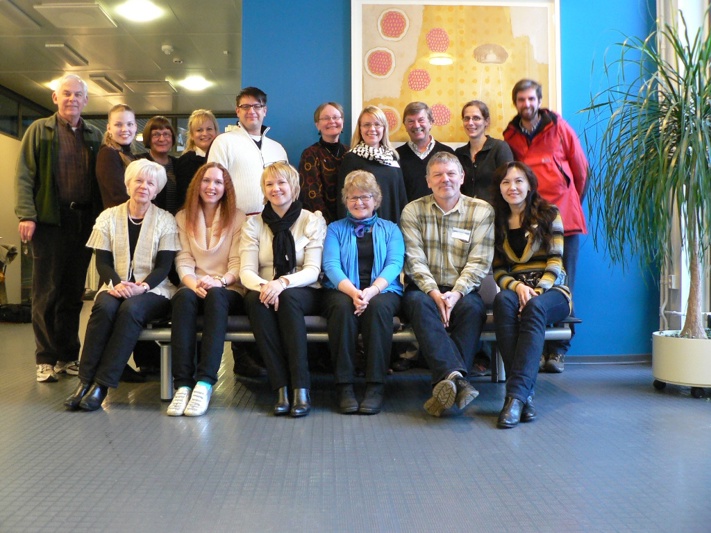
One of the network’s flagship initiatives was the 2 years’ Master’s program on Circumpolar Health and Well-being (120 ECTS, UArctic Master program) led by University of Oulu with six partner universities (University of Lapland, Finland; Luleå University of Technology, Sweden; University of Southern Denmark, Denmark; Northern State Medical University, Russia; Pomor State University, Russia and University of Manitoba, Canada). Running from 2005 to 2017, this international program graduated more than 20 students — two of whom have since completed their PhDs. Graduated students were from North America, Russia and Nordic countries. Important starting point for this was to give possibilities for educational opportunities to all in the Arctic, and the obligatory part of studies was online courses. Also, a complementary PhD studies and student exchange program (funded from 2012 to 2015) provided early-career scholars with opportunities for research visits and network-building across Arctic institutions. Over time these activities have stayed, and the latest PhD course is in the connection of NUNAMED 2025 conference in Nuuk, Greenland.
Between 2020 and 2024, TNHW received Norwegian UArctic funding to develop a postgraduate course on One Health. This resulted in the successful launch of a multidisciplinary 10 ECTS course, One Health in Northern Communities and Ecosystems, which began running in 2024. The course reflects growing interest in holistic approaches to health across the Arctic and is taught collaboratively by TNHW members and external partners, hosted by the University of Inland Norway.
Topics related to Arctic health and well-being are also being taught in various university settings by TNHW-affiliated educators. For example, the University of Alaska Fairbanks offers a full One Health Master’s Degree (OHM), while McMaster University in Canada teaches the course Circumpolar Health: A Global Health Perspective. These educational efforts help embed Arctic health themes into broader academic contexts and strengthen the visibility of circumpolar health as a global concern.
