
Student story - north2north exchange, Sweden to Australia

Linnéa Karlsson recounts her exchange semester to University of Tasmania supported by a north2north grant.
There are several campuses in Hobart and in Tasmania within UTAS, keep this in mind when researching the courses you plan to apply for. (This rapport will be about UTAS in Hobart.) The walk between Sandy Bay campus and the campuses in the city centre takes about 30 minutes. There are local buses and a campus shuttle,but the timetables don’t always work well. Be prepared for the visa process and how much it cost. Apply as soon as possible when you've got your acceptance letter, it can take up to 3 month to get the visa. (It took 5 minutes for me). The cost for a visa application is 2000AUD (≈12300kr) regardless if it's accepted or not.

Flights to Australia can be expensive, especially since you might not want to buy a ticket before you've your acceptance letter and a visa. Be prepared to pay around 12.000kr for a one way ticket. UTAS arranged buses from the airport a few days before Orientation Week started. I arrived before these services began but it was still easy to get into the city by either SkyBus (22AUD) or with Uber (40-60AUD).
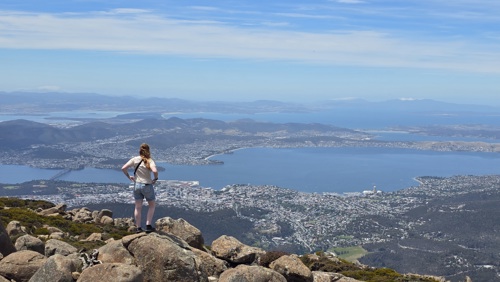
Local busses are free during weekdays when you show your Student ID. Fares are still cheap without it. but you need cash or a Metrocard (which you can get in CBD) to pay. Card payments are not accepted. Buses run frequently within the city but are more difficult to use outside Hobart. Many students bought cars to make it easier to go on adventures and then planning to sell them before returning home. I didn’t do this myself, but I got to know people who had cars.The climate was cold during winter, not as cold as in Sweden but central
heating is not common. It was sometimes colder inside than outside during winter. I think my coldest night was around 3°C but the climate is also more humid, which can make it feel colder than it is. Bring layers! Be prepared for Alpine environment, you will want to visit those. The biggest difference I can think of is that you will read all 4 courses simultaneously. It was an adjustment to adapt to a different study structure compared to MIUN, where I usually study 1-2 courses at a time.
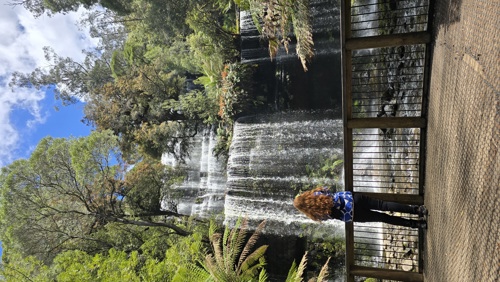
The first week was Orientation week, this was mandatory for all Exchange and International students and a great opportunity to meet new people, get freebies and lots of information about whats to come. There's also an UTAS facebook group for Exchange and International students which I recommend to join before going. I got in contact with people through that group before going and also a great channel to ask questions. (Facebook overall is huge in Australia and used for almost everything)
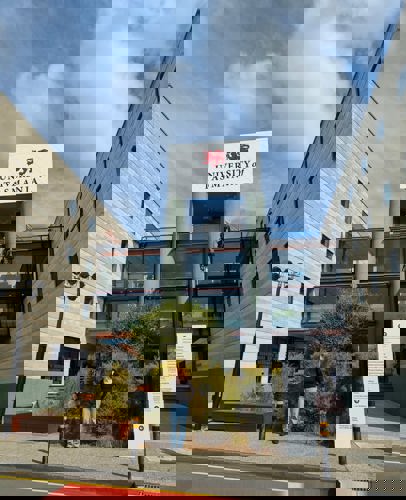
One of my courses was Introduction to Marine and Antarctic science, which focused on the southern hemisphere but talked about Arctic and the northern hemisphere as well. Another course I took was 'Nature, People, Place' which discussed land use and how people depend on nature. Both courses are based on Australian contexts, but it is possible to relate the content to local areas and discussion in Sweden and will broaden the knowledge on how everything is connected.