
Participant report from UArctic Congress 2026: Mariah Seater

Mariah Seater, currently an MBA student at the University of Alaska Fairbanks, shares experiences and insights from attending the UArctic Congress 2026.
My academic and professional work is rooted at the University of Alaska Fairbanks, where I serve within the Center for One Health Research and the College of Indigenous Studies. My research focuses on One Health, healthcare equity, and maternal and child health, with a particular emphasis on Arctic and Indigenous community contexts. These areas of inquiry are deeply interconnected in Alaska, where environmental change, health disparities, and community resilience shape the lived realities of families and the systems that support them. As an early-career scholar and a recent Fulbright Arctic Initiative alumna, I am committed to advancing research and partnerships that strengthen health equity across the Circumpolar North.
In addition to my research and faculty role, I am now pursuing an MBA at UAF with a focus on healthcare. This training has expanded the way I understand health systems, particularly the cross-cultural, cross-sector dynamics that influence access, delivery, and equity. The MBA lens is helping me “connect the dots” between business structures, policy environments, and community-level health outcomes. It has also raised bigger questions for me about women’s and children’s health, especially for Indigenous populations who are often left out of these conversations from both a business perspective and a research perspective. Bringing this systems-level understanding into my One Health work has strengthened my ability to analyze how institutions make decisions, how resources flow, and how inequities persist or can be disrupted.
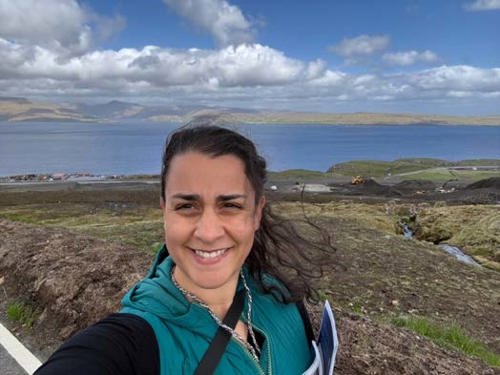
Attending this UArctic Congress represented a pivotal moment in my professional trajectory. This was my first oral conference presentation, my first international Arctic research convening, and an opportunity to present both an oral talk and a poster to a global audience of One Health, public health, and Arctic health leaders. The purpose of my travel was not only to share my emerging research but also to immerse myself in the broader landscape of Arctic health scholarship, something that cannot be replicated through email, virtual meetings, or literature alone. I wanted to understand the current priorities, innovations, and challenges shaping Arctic health, and to meet the people who have been leading this work for decades.
My decision to attend this conference was shaped by my Fulbright Arctic Initiative experience, which emphasized the importance of cross-border collaboration, Indigenous leadership, and community-engaged research. As I transition into the next stage of my career, I recognized that I needed to be physically present in the spaces where Arctic health conversations are happening. Being in the room, listening, learning, and contributing, is essential for building the relationships and trust that underpin meaningful work in the Arctic. This conference offered a rare opportunity to connect with researchers, policymakers, and community leaders from across the Circumpolar North, many of whom I had only known through publications or brief virtual interactions.
The travel grant made this experience possible. After exploring all other funding avenues and coming up short, I simply would not have been able to attend without this support. The financial barrier to international Arctic travel is significant, especially for early-career faculty based in Alaska. This grant removed that barrier and opened the door to opportunities that will shape my career for years to come.
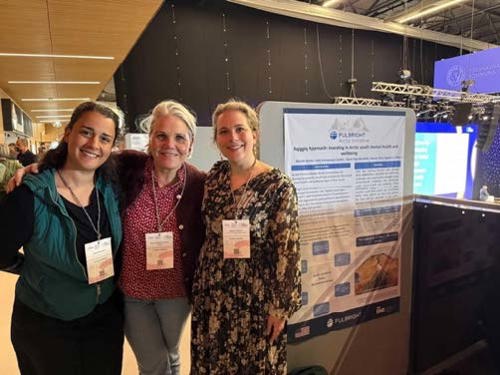
The impact of attending the conference was immediate and profound. I established new networks and partnerships that I could not have formed otherwise. I was invited to co-author a book, a collaboration that emerged directly from conversations sparked by my oral presentation. I also developed a new partnership with the University of the Faroe Islands, where I was asked to contribute content related to my research focus areas. These opportunities reflect not only the relevance of my work but also the importance of being present, visible, and engaged in international Arctic health dialogues. I cannot underscore enough how these connections will support future collaborations, grant proposals, and cross-institutional initiatives, including my ongoing efforts to strengthen One Health leadership and learning networks across Alaska.
Presenting my research in this setting also helped me refine my scholarly voice and gain
confidence as an emerging leader in the field. Sharing my work with an international audience, receiving feedback, and engaging in dialogue with experts broadened my perspective and sharpened my understanding of where my research can contribute most meaningfully. The experience affirmed that my focus on healthcare equity and maternal and child health within a One Health framework is both timely and urgently needed.
The travel grant was funded by Scandinavian Seminar.