
Student report from UArctic Congress 2026: Anika Affleck

Anika Affleck, a Master's student at University College London and also working with the Institute for Circumpolar Health Research, shares experiences and insights from the UArctic Congress 2026.
I am currently completing a Master of Public Health (MPH) at University College London while working with the Institute for Circumpolar Health Research (ICHR) in Yellowknife, Northwest Territories, Canada. Growing up in the North has shaped both my personal and professional interests, and I am passionate about supporting healthy, resilient northern communities.
My work focuses on Indigenous health, community wellness, health equity, and community-led research. My current research explores how traditional arts and land-based practices support mental and emotional wellness among Northern Indigenous women. I am particularly interested in understanding how culture, relationships, and Indigenous knowledge contribute to health and wellbeing across the Circumpolar North.
Purpose of My Travel
I attended the UArctic Congress 2026 and Ocean Connectivity Conference in the Faroe Islands to connect with students, researchers, community leaders, and professionals from across the Arctic. As a young Northerner and early-career researcher, I was excited by the opportunity to learn from others working on issues that matter deeply to northern communities.
The Congress was especially meaningful because it brought together people from many different Arctic regions and disciplines. Although we come from different places, I was struck by how many common values and experiences we share, including the importance of community, culture, relationships, and connection to place.
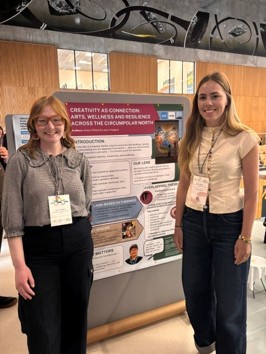
One of the highlights of the Congress was co-presenting a session titled Creativity as Connection: Arts, Wellness and Resilience Across the Circumpolar North. The presentation explored how creative and cultural practices such as beading, sewing, storytelling, harvesting, and gathering support identity, belonging, resilience, and wellbeing in northern communities. It was rewarding to share work grounded in northern experiences and to hear how these ideas resonated with others from across the Arctic.
Beyond presenting, I wanted to attend this event because I believe collaboration is essential for addressing the opportunities and challenges facing northern communities. The Congress provided a unique space to build relationships, exchange ideas, and learn from people working in research, education, health, policy, and community development.
Impact of the Grant
Receiving this grant made my participation possible. As a graduate student, international travel can be financially challenging, and I am incredibly grateful to UArctic and Global Affairs Canada for providing support to students and early-career researchers. Without this funding, attending the Congress would have been much more difficult.
The experience had a significant impact on both my personal and professional development. I had the opportunity to meet inspiring people from across the Circumpolar North, learn about innovative projects taking place in other Arctic regions, and expand my understanding of the shared priorities facing northern communities.
The Faroe Islands were also an incredible place to experience. Spending time in another northern island community gave me a deeper appreciation for both the diversity and interconnectedness of Arctic regions. It was inspiring to see how local culture, history, and community continue to shape life in the Faroe Islands while connecting with visitors from across the North.
Attending the Congress strengthened my confidence as an emerging researcher and reinforced my commitment to working in northern and Arctic health. The relationships I built, the conversations I had, and the ideas I was exposed to will continue to influence my studies, research, and future career.
I left the Congress feeling inspired, energized, and excited for the future. The experience strengthened my desire to stay involved with UArctic, participate in future Arctic gatherings, and become more engaged in youth and early-career researcher networks across the Circumpolar North. I am grateful for the opportunity and look forward to continuing to build relationships and contribute to a healthy and resilient Arctic.
Thank you to UArctic and Global Affairs Canada for making this experience possible.
The travel grant was funded by Global Affairs Canada.